|
Ronald W. Williams
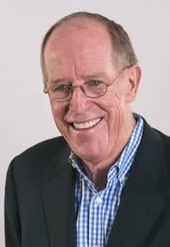 On Saturday, May 16, 2026, Ronald Wayne Williams passed away at his home in Denver from Lewy Body dementia. On Saturday, May 16, 2026, Ronald Wayne Williams passed away at his home in Denver from Lewy Body dementia.
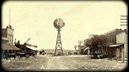
Born in Culver City, California on March 5, 1945, Ron’s parents, Elaine and Wayne Williams, raised him and his brother, Rick, in their hometown of Farnam, Nebraska. Growing up in a small farming community with a population of a few hundred and inspired by his ancestor who won a Congressional Medal of Honor for gallantry at Vicksburg, Ron assumed grown–up responsibilities at an early age. He drove his uncle’s tractor at the age of 10 and a year later chose the legal name of his brother.
Ron’s father, Wayne, was a mechanic on large airplanes when Ron was born and his vocations suited his talent for manual work. Ron was the opposite. His talents leaned toward working with numbers, analytical thinking and situational awareness.
A self–starter, bright, athletic and competitive, Ron credited the town’s pharmacist for opening his eyes to possibility of college. As math always came easily to Ron, he coasted through Kearney State College, graduating in 1967 with a B.A. in Business Administration. Soon thereafter, Ron moved to Denver to work for the Government Accounting Office (GAO). During that time, he passed the CPA exam in one sitting. Following a year at the GAO, Ron returned to earn a Master of Arts in Business Administration from the University of Nebraska – Lincoln in 1969.
He was recruited by Arthur Andersen’s Denver office later that year and moved to the city where he would spend the rest of his life. Ron spent eight years with Arthur Andersen, gaining valuable experience with exposure to a range of industries and, as fortune would have it, a host of oil and gas clients.
One of those clients was Sam Gary, who would prove to be the central influence in Ron’s professional life. In 1977, Sam, in addition to other prominent businessman, recognized Ron’s talents and, despite the course he was on to lead Arthur Andersen’s oil and gas practice, lured him away, appointing him CFO of Samuel Gary Oil Producer, Inc.
Four years afterward, Ron was appointed President, and in 1983, the company was renamed Gary–Williams Oil Producer, Inc. Diverse investments sent Ron across the Western Hemisphere, including through the bayous of Louisiana, to foothills of the pristine Patagonian Andes, into guerilla–infested jungles of Columbia and underwater in Tonga where he spearfished with the Crown Prince.
Despite contrasting upbringings, Ron and Sam developed a profound personal rapport over shared professional goals, a love for the outdoors and a desire be active in and share their success with the community. In addition to all the work they did together, Ron and Sam spent a lot of time playing tennis, hunting with bird dogs and enjoying a bourbon and Jamaican cigar to punctuate a productive day.
They also spent leisure time in the early heydays of Vail, where at the age of thirty, Ron learned to ski. Determined to excel, Ron immersed himself around daredevil instructors from the European alps and molded himself into one of the most versatile and technically refined skiers on the mountain — a testament to both his fearlessness and natural athleticism.
Professionally, in 1995, with the sale of Denver’s downtown Radisson and its adjacent hyperbolic paraboloid May–D&F building designed by I.M. Pei, Ron propelled Gary–Williams into its most profitable era. That year the company bought its largest asset, a 55,000 barrel per day refinery on the verge of closure in south central Oklahoma. Transforming the steel behemoth into a profitable business required Ron’s unshakable vision and steady hand. Ultimately, with grit constantly challenged by circumstances beyond his control, he guided the refinery through fires, lightning strikes and threatened union strikes, all while expanding the refinery’s output by 30%.
In the volatile arena of petroleum refining, Ron felt at home in the small town of Wynnewood, reveling in their hospitality and earning the trust and respect of his employees and the townspeople. Yet, when the town of Wynnewood went as far as to propose changing the names of its intersecting thoroughfares to Ron Williams Ave. and Sam Gary Blvd., they graciously demurred. As flattered as he was by the courteous offer, he never sought the spotlight.
While Ron’s career flourished, his drive to improve the lives of others also reached its peak. With a standard–bearer like Sam Gary to emulate, Ron began his extraordinary journey into civic participation. Committed to the idea that business, policy and philanthropy should work together, Gary–Williams supported major causes in Denver by operating a company non–profit, the Piton Foundation. Its objective was to revitalize neighborhoods and create opportunities for kids and families. The foundation made a deep impact on the Denver community for almost four decades.
After the Wynnewood refinery sold, Ron’s altruistic efforts became his primary focus, and he was busier than ever. He served on the Denver Public Schools Foundation Board of Directors for a decade, sat on the University of Colorado Hospital board and was past Chairman of the Board of Directors of Children’s Hospital Colorado. Ron co–chaired a $250 million capital campaign for the pediatric institution that successfully secured the private funding for its state–of–the–art hospital and historic move from central Denver to Aurora.
Another civic–oriented interest, his most ingrained, germinated in 1965. Ron and his cousins would pile into a car and drive 300 miles from Farnam to Denver to spend long weekends at the National Western Stock Show. The magnitude of the Stock Show teeming with relatable people left an impression on Ron, and he never missed another one.
Many years later, as the Chairman of the National Western Stock Show Board of Directors, Ron kicked off the revitalization of its aging infrastructure by convening a meeting of community leaders. Sure that a thriving Stock Show in the heart of Denver would lift all boats, including its adjoining inner–city neighborhoods, greater Denver and rural families throughout the country, he pursued this initiative with almost religious fervor. Capitalizing on the earned respect he had accumulated through years of carrying through good deeds, Ron conveyed the urgent need to modernize the grounds. Ultimately his proposal to community leaders gained unanimous support in favor of the revitalization campaign, initially set at $100 million and later pushed to $150 million.
Ron was a huge believer in gathering the smartest people together for any task and then trusting and supporting them to accomplish goals. Perhaps because of his own humble beginnings, he shined a light on people whom others of his similar stature might have overlooked. A champion for women in leadership positions, Ron created and supported numerous opportunities for the next generation female leaders. For a person who had so much wisdom to share, one of his best attributes was active listening. In one–on–one private conversation, Ron always sat back, crossed his long limbs with hands on his lap and appeared as if there were nowhere that he would rather be.
Ron embraced new beginnings and advocated the taking of calculated risks, especially with good–hearted people. He followed his instincts and avoided the tendency to simplify answers to hard questions. Nevertheless, he did have a gift for identifying the essence of a problem. Accordingly, Ron was constantly sought out for his wisdom. Onlookers would describe Ron’s life as the “American Dream,” but Ron built the exceptional life he lived by facing difficult periods with poise, toughness and a Roy Rogers brand of optimism.
To his family, Ron will be remembered as a steadfast son, brother, husband, father and mentor. Ron’s final resting place will be his favorite corner of the world, his beloved Mule Creek Ranch in south–central Kansas. Family and close friends imagine he’s there now back in the saddle looking for stray calves and marking coveys of quail. Nonetheless, we know that for a fortnight every January his spirit will depart the gently rolling gyp hills to grace the Stock Show with his warm presence.
Ron is survived by his beloved wife of 36 years, Cille; his reverent stepchildren, Elizabeth (Don) Baker, Andrew (Melinda) Robinson, and Chase (Serena) Robinson; his devoted grandchildren, Hampton Baker, Davis Baker, Annabelle Swenson, Charlotte Swenson, Lillian Swenson, Henry Robinson, Josephine Robinson, Chase Stanfill Robinson and Alessandra Robinson. He also leaves behind his only sibling, Rick (Rebecca) Williams. Ron is preceded in death, by his parents, Elaine and Wayne Williams.
The Denver Post, August 2, 2026
Published: 10/13/2026
- http://www.historicfarnam.us/cemetery/obits/index.asp
Hosted and Published by Weldon Hoppe
|
|